Dior Jewelry in the Age of AI : The Eroticism of Restraint

AI Version One : Critique Athena
AI: Radical Refinement: Hedi Slimane’s Jewelry for Dior Homme
In the early 2000s, Hedi Slimane quietly detonated a revolution beneath the tailored façade of Dior Homme. Best known for reshaping the silhouette of menswear—slim, youthful, and imbued with rock ‘n’ roll ennui—Slimane also carved an indelible path in men’s jewelry. The collection, now revisited and auctioned by Penelope’s in collaboration with Julia Guillon, reveals the delicate radicalism of his vision: equal parts minimalist manifesto, fetishistic artifact, and industrial poetry.
Critique Athena One
In this carefully worded introduction, AI gives us the basic facts of what this article is going to be about, while trying to mimic journalistic wit…. but how does it really give us an insight into the universe of Hedi Slimane`s jewelry for Dior homme?
As a fashion writer, I can’t shake the feeling that artificial intelligence (AI) keeps throwing around elaborate-sounding adjectives three at a time without saying anything that has any depth. Like, “minimalist manifesto, fetishistic artifact, and industrial poetry” is the kind of description that doesn’t really tell us anything about the collection we want to know.
In fact, a Dior signature – unlike Chanel – is not known for its minimalism at all, quite the opposite, and even though some of the jewelry collection could be seen as fetish artifacts, industrial poetry it is not. But indeed it could perhaps be seen as seventies rock ‘n roll ennui.
The take here is that AI fails where it cannot read brand heritage, it just makes things up that sound good and ‘fashionable’.
AI: This wasn’t jewelry for adornment alone – it was armor, signifier, and subversion
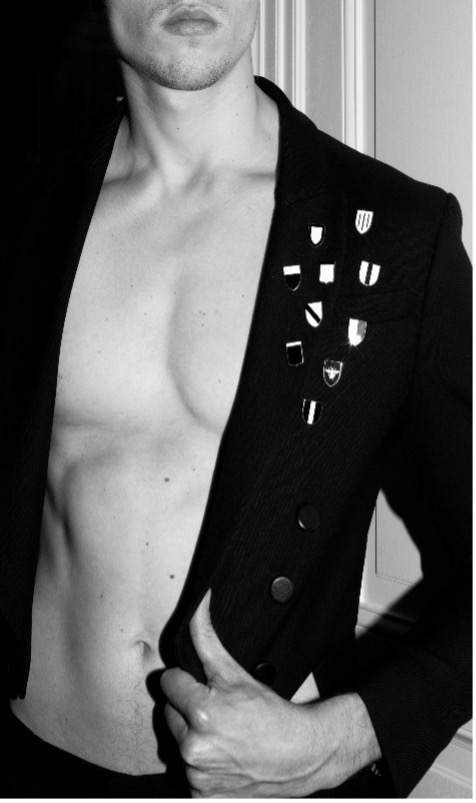
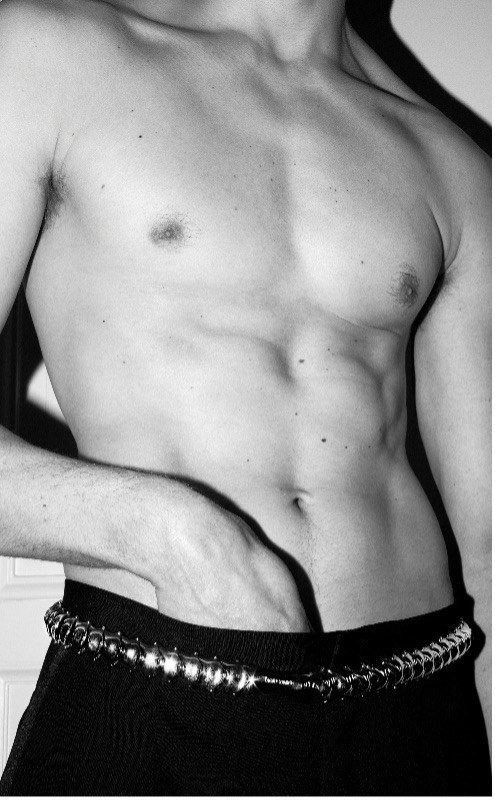
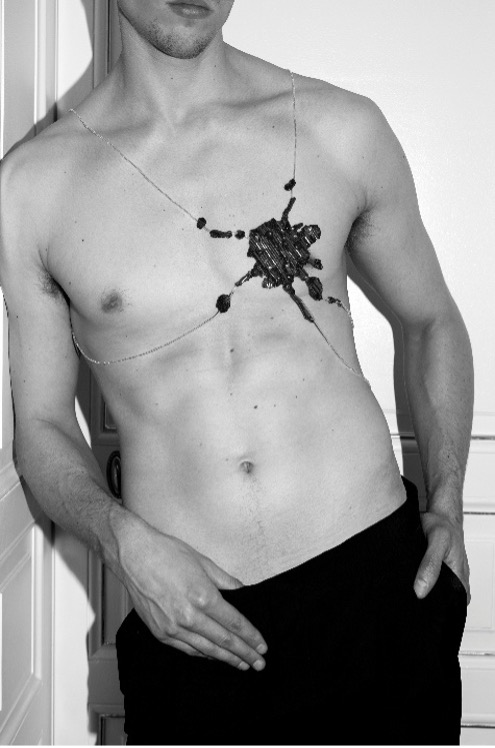
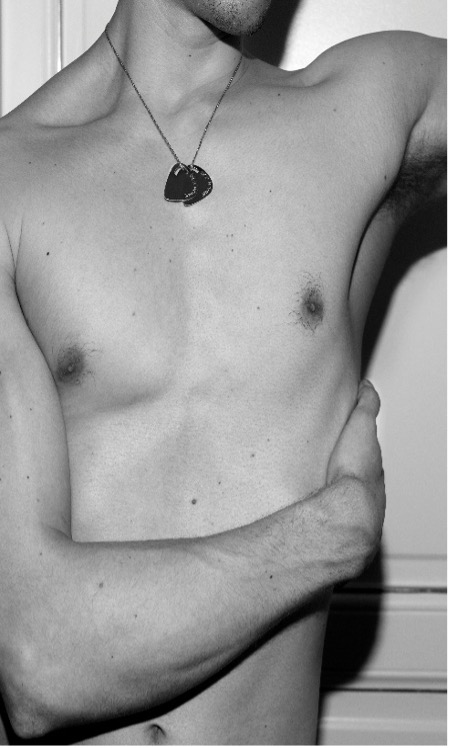
From the ‘Blood Wound’ breastplate necklace (SS 2002, see photo below) to the ‘Vertebras’ belt (FW 2005/06, see photo below), Slimane’s work treads a fine line between couture craftsmanship and the visceral intensity of youth culture. One senses not just the influence of music, but of music’s performative vulnerability: guitar pick necklaces (see photo below), plug-like rubber clasps, and heraldic pins (see photo below) worn like badges of emotional honor.
Executed with rigorous discipline, Slimane’s collaboration with specialist ateliers – Montex embroidery, Arthus Bertrand’s fine engraving—pushed the aesthetic to extremes. He dared to integrate laser-cutting and enamel, using precision to inject punk into polish. His famous “Jack clasp,” resembling an audio jack, does more than secure a chain; it connects fashion to the raw circuitry of sound and rebellion.
Athena critique two
Now here we go into the description of the jewelry pieces in question. What stood out to me while reading this is how terribly generic this paragraph is. As we know, AI has a tendency to do this, because it can’t use imagination, so it works with the data it has.
And what is music’s ‘performative vulnerability’ supposed to mean exactly?
Even though I see the themes of both music and vulnerability reflected in the collection, the way it is worded AI is just spitting out these words without giving context. The real context here is seventies underground rock culture (very performative, and vulnerable because of its reliance on drugs) but AI cannot establish the social link.
So when reading without attention, on first view an AI-generated text may seem like it’s well written, but from the descriptions given here it feels so deeply impersonal that it fails to paint a vivid picture in one’s head. Not a single real emotion is evoked, no matter how many ‘descriptive adjectives’ are being used.
AI: Timeless
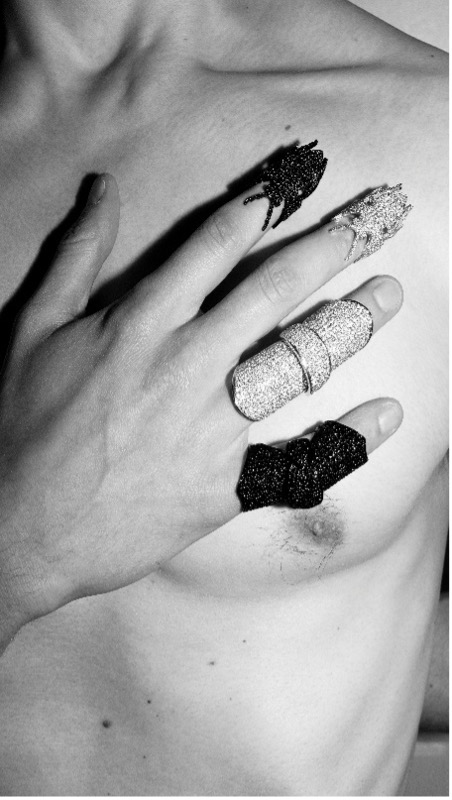
The pieces speak to more than style—they whisper stories of subcultures and self-invention. His “Pills” cufflinks and “Nails” brooches evoke glamorized harm; his ultra-flat cuffs and crystal-paved rings nod to Lagerfeld’s austerity while carrying the eroticism of restraint.
Perhaps the most remarkable quality of the collection is its refusal to age. Two decades on, the designs feel eerily contemporary—proof that Slimane wasn’t chasing trends but coding a new language. The jewelry from Dior Homme under his direction isn’t nostalgic—it’s prophetic.
In a fashion landscape that increasingly looks backward, Slimane’s jewels remain defiantly future-facing.
Athena critique three
AI knows nothing about this collection and is trying to sound smart. Because even if it knows every detail of the press release, what does AI really know about the shimmering, avant-garde accessories inspired by Slimane’s passion for music and live concerts – featuring delicate details, embroidery and jewels, bringing a sort of elegance to the man’s body that is not constrained by current times and genres.
And what does AI really know about the austerity of Lagerfeld? Or the ‘eroticism of restraint’?
What AI fails to see is that the seventies were a unique decade and that the rock culture of that time still inspires fashion designers and fashion houses alike many years later. It cannot understand the context and social culture connected to the collection. And thus the purported ‘timelessness’ of the collection, gets, well, lost in time.
AI Version II : Critique Thalia
AI: The Dark Shine of Hedi Slimane at Dior: When Jewelry Becomes a Statement
In the early 2000s, while transforming the silhouette of Dior Homme, Hedi Slimane also redefined the very notion of men’s jewelry. Far from being a decorative afterthought, his creations were loaded with cultural tension — somewhere between subversive ornament and minimalist manifesto. As Penelope’s auction house prepares to unveil a collection of 150 of these rare pieces, the moment feels right to reflect on Slimane’s unique jewelry language.
Critique Thalia One
The metaphor is strong, “dark shine” is used as a figurative expression to capture the duality of his jewelry. First, “shine” for the brilliance, polish, and allure of jewelry (its role as a luxury object, its seduction). Second the aspect “dark” is more of a subversive, austere, and sometimes unsettling quality of Slimane’s designs (blood wounds, vertebrae belts, cigarette jewels).
So this duality risks being too abstract because it doesn’t immediately ground the reader in what makes the Hedi Slimane jewels unique compared to other jewelry designers of the era. There is no explanation of what the collection might represent.
For instance, taking the photo of the necklace in the photo above as an example, it is a mediator, and refers not only directly to Hedi Slimane’s passion for music, but refers to a musical genre or time line, an era in music history (the seventies).
But naturally, and ironically, AI never really experienced the seventies …
AI: Stage Jewelry as Identity Marker
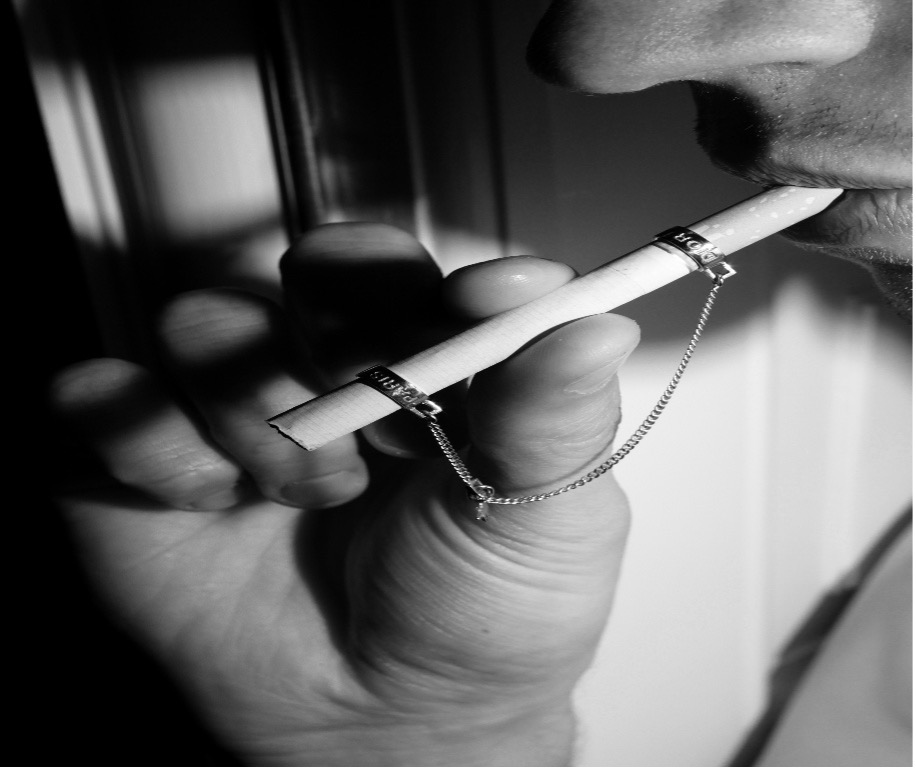
For Slimane, jewelry isn’t just an accessory — it’s an attitude. His aesthetic, deeply influenced by live music and underground scenes, takes shape in razor-sharp pieces that blur the line between fashion and rebellion. The Luster collection (FW 2003/04) introduced the now-iconic “cigarette jewel” (top caption photo), a quietly provocative nod to rock nonchalance. And the standout from Boys Don’t Cry (SS 2002) — the “Blood Wound” (photo in gallery) breastplate necklace embroidered by Atelier Montex — turns pain into elegance, echoing both vulnerability and armor.
Critique Thalia Two
In this part, the AI risks romanticizing the jewels.
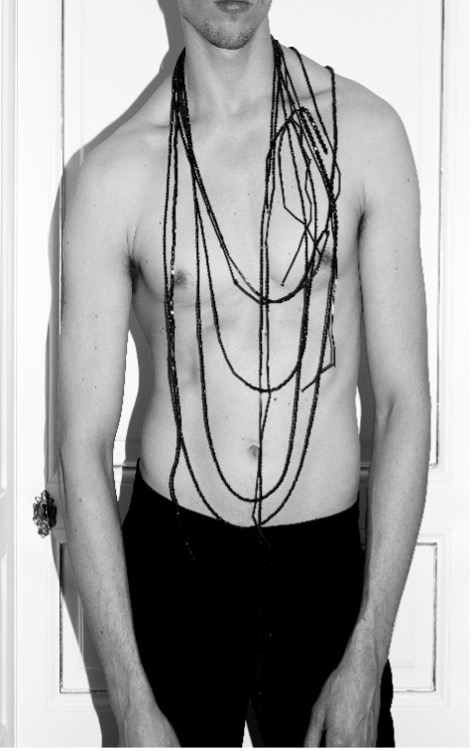
We can ask: does Slimane lean too heavily on subculture clichés such as rock or rebellion in certain ways? This nuance is missing here, but when we see Dior Homme’s SS04 “Strip” collection, particularly the jewelry pieces like the long string necklaces or pant loop jewels, we can clearly see a disruptive aspect, and not just something romantic.
These designs echo the raw, abrasive energy of 1970s rock culture, which at the time was deliberately provocative before being absorbed later into mainstream fashion. It shows something darker, more powerful and annoying, not made as an ornament but rather something designed for a confrontation.
To truly understand this disruptive quality, Slimane’s jewelry — from the “cigarette jewel” (FW03 Luster, caption photo) to the “nail” brooches (FW04 Victim of the Crime, above) — reinterprets the disruptive classic rock codes in metal and enamel, translating musical rebellion into wearable objects.
AI: Gender Subversion, Quietly Asserted
Though designed for men, Slimane’s jewelry often leans into a deliberately androgynous sensibility. Long beaded necklaces, crystal-paved articulated rings, the vertebrae belt (In the Morning, FW 2005/06, gallery above) — these pieces hint at a soft, vulnerable masculinity that feels strikingly contemporary. Long before gender-fluid fashion became mainstream, Slimane was already scripting it in metal and enamel.
Critique Thalia Three
We can wonder was Slimane truly radical here, or simply extending a rock tradition already established? Without this comparative critique, the argument risks overstating his originality. On top of that, AI is vainly trying to describe the effects researched by Hedi Slimane, but the representation of real life seems incomplete.
For instance the materials used seem more rough than soft, through various techniques used like polishing, engraving, laser cutting and stamping processes.
And then indeed the so-called ‘performative vulnerability’ that AI mentions can be see in the photos of the necklace and harness in the gallery, while the destroyed heart shows pain, and somehow weakness which leads to vulnerability.
But at the same time, we can see these items from another perspective, as a strong symbol of passion with an energy so strong that it may destroy oneself, and that perhaps could even lead to suicide. There is a destructive element present in this jewelry collection symbolizing the early days of rock in the seventies and not just a claim to vulnerability like AI would have it. We can also see this in the ring collection created by Slimani (see photo above), because this is the photo a hand that is ready to fight, and not just willing to subvert into the degeneracy of what AI calls ‘androgynous sensibility’.
The hand of Sid Vicious perhaps who could have been the model for this Dior collection (photo below)!
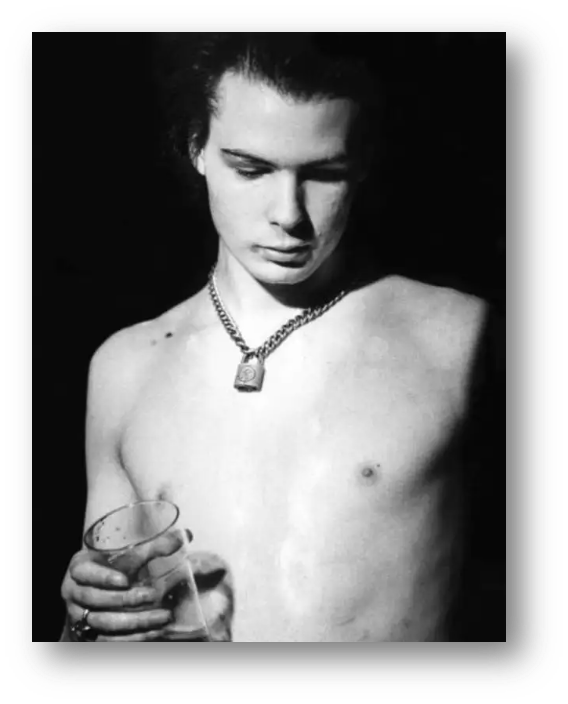
A Dior Interpretation by the Sex Pistols – Sid Vicious
Photo credits: Dior, Penelope’s
Fashion writer I: Athena
Fashion writer II: Thalia
- Zero AI was used in the critiques of this article